

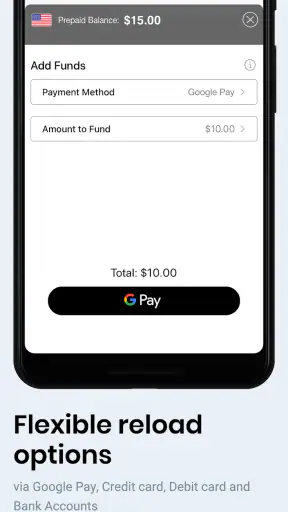
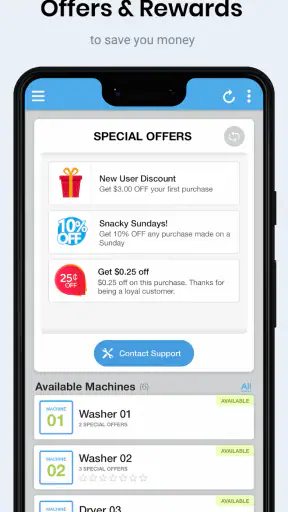
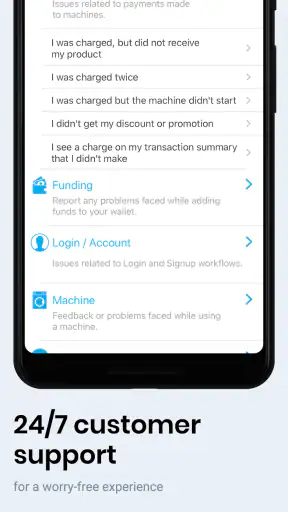
When I first tried PayRange, I approached it as a very specific shopping tool rather than another general payment wallet. Its purpose is to help pay for compatible machines from a phone, which makes it most useful in places such as shared laundry rooms, vending areas, or other unattended equipment locations. I like that focused idea: instead of handling every kind of purchase, it aims to remove the awkward search for coins when a machine supports PayRange.
That narrow purpose also explains the app’s main strength and its biggest limitation. If you regularly use machines that accept PayRange, it can turn a small chore into a quick phone interaction. If the machines around you do not support it, the app has little practical value no matter how polished the experience feels. I would describe it as a convenient companion for a particular payment situation, not as a replacement for every card, cash option, or mobile wallet.
How PayRange fits into shared everyday routines
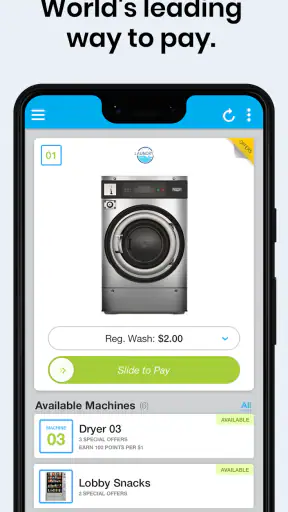
The most realistic household use is a shared laundry room. Imagine carrying a basket downstairs, discovering that the washer needs payment, and realizing that nobody has enough change. With PayRange already set up, I can check the machine, use the app where the PayRange system is available, and avoid returning home for coins. That is a small improvement, but it matters because laundry is usually a task where convenience is more valuable than extra features.
The same logic can apply when several people use the same building or facility. A student sharing accommodation, a parent managing laundry for a household, or a resident in an apartment complex may all encounter the same machines. In those situations, the app is useful because payment happens at the point of use rather than through a separate visit to a desk or a search for a change machine.
There is an important practical habit I would recommend: check the machine for PayRange support before depending on the app. The presence of the application on your phone does not make every washer, dryer, or vending machine compatible. I would keep a backup payment method available the first few times, especially in an unfamiliar location. That is not a criticism of the app; it is simply the reality of a machine-based payment system.
PayRange comes from PayRange Inc. and sits in the shopping category, although it feels more like a utility for completing a purchase than a place to browse products. The app is free to install, which lowers the barrier to trying it. Its age rating is Everyone, so it can fit a household where different people may need to use a shared laundry facility, but that does not remove the need for an adult to decide how payments should be handled.
What the first setup changes in a shared home
Before adding the app to a family routine, I would decide whose phone and payment arrangement will be used. A shared device can be convenient when one person usually handles laundry, but it can also create confusion if several people assume they can use the same account or payment method. The cleanest approach is to choose one responsible user for the initial setup and make sure everyone else knows whether they should ask that person to pay or use their own device.
This boundary is especially useful in households with teenagers or visiting relatives. The app’s Everyone rating describes who can use it from an age perspective, but it should not be interpreted as a reason to hand over unrestricted access to a payment method. The important question is not whether someone can operate the app; it is whether they are trusted to initiate a paid machine cycle without checking first.
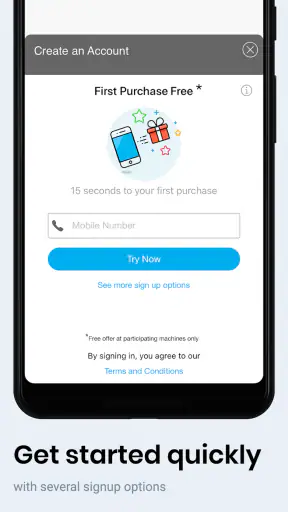
I also prefer setting up the app before standing in front of a full laundry room. A calm setup at home gives you time to understand the screens, sign-in process, and payment flow. At the machine, people are usually carrying clothes, watching for an available washer, or trying not to block others. Preparing beforehand reduces the chance of making a rushed decision or discovering that the selected payment method needs attention.
Because the app is designed around machine payments, the location itself is part of the setup. I would look for the PayRange identification on the equipment and keep the phone ready before selecting a cycle. This simple order matters: identify the compatible machine, confirm the intended machine, then complete the payment. In a room with several identical washers, skipping that check can lead to paying for the wrong unit, which is a more serious mistake than merely tapping through the wrong menu.
Coordinating payments without stepping on each other
Shared use works best when the household agrees on a basic routine. One person might pay for all laundry and settle the cost informally, while roommates may prefer that each person pays for their own loads. PayRange can support the payment moment, but it does not replace that household agreement. I would not treat the app as a family organizer, because its central job is machine payment rather than scheduling chores or dividing responsibilities.
A useful arrangement for roommates is to announce who is starting a load before using the shared payment method. That sounds obvious, but it prevents two people from assuming the other person has already paid or from selecting the same machine at nearly the same moment. If one phone is used by several people, returning it promptly after the transaction also avoids the practical problem of somebody waiting for access while their clothes sit in a basket.
For a parent and child, I would use a different approach. The adult can handle the payment while the child learns the physical routine of sorting clothes, choosing the correct machine, and checking that the door is closed. Once the child is trusted with the payment step, the adult can still establish a simple rule: ask before starting a cycle and confirm the machine number aloud. That kind of verbal check is valuable in a room full of similar equipment.
Another small but worthwhile habit is to review the transaction screen before confirming. I look for the selected machine and the amount being requested, then compare it with the cycle I intended to start. This is where a phone payment differs from dropping coins into a clearly marked slot: the app can make the process faster, but speed can also encourage careless taps. Taking a moment to verify the target is the best protection against an avoidable payment error.
I would also avoid assuming that one person’s successful use guarantees that every other household member will have the same experience. Phones differ, people use different accounts, and a device may not be available when needed. If the household depends on one phone, it should be treated as a shared tool with a known location and a charged battery, not as an invisible service that everyone can access whenever they want.
Trust, age, and the limits of a shared device
The Everyone content rating makes PayRange approachable for a broad audience, but payment responsibility still belongs with the household. A child may be perfectly capable of following the machine instructions while not being ready to manage a payment account independently. I would separate those two abilities rather than treating app simplicity as proof that the entire transaction is suitable for every user.
For younger users, supervised use is the sensible middle ground. An adult can unlock the phone, review the machine selection, and let the child perform the physical steps. This gives the child confidence with the laundry routine without turning a payment tool into an unsupervised spending channel. For older teenagers, the decision can depend on the household’s normal rules for phones and purchases.
Shared-device use also raises a privacy and trust question. I would not leave a payment-enabled phone unattended in a public laundry room, and I would avoid passing the device around casually after signing in. The risk is not unique to PayRange, but the app’s convenience makes it easy to forget that the phone represents a real payment action. A little discipline around who holds the device is more useful than expecting the app to manage family relationships.
Roommates need a similar boundary. If everyone has their own phone, individual use may be clearer because each person can manage their own payment flow. If only one person has the app, that person should agree in advance whether others may use the device and how reimbursements will be handled. PayRange can make the machine transaction easier, but it cannot resolve disagreements about whose money was used.
I appreciate that the app’s focus keeps the experience understandable. There is no need to learn a large shopping marketplace before paying for a compatible machine. At the same time, users expecting parental controls, chore assignments, shared budgets, or detailed household permissions may find the experience too limited. Those are reasonable expectations for a family finance or home-management product, but they are outside what I would choose PayRange for.
Where it beats coins, cards, and general wallets
Compared with coins, PayRange is more convenient when the machine supports it and the phone is ready. I no longer need to estimate how much change to carry or interrupt the task to find a coin dispenser. That advantage is strongest for people who use the same compatible location repeatedly, because the payment routine becomes familiar and predictable.
Compared with paying directly by card, the benefit depends entirely on the equipment. Some machines may already offer a card reader or another contactless method, in which case using a physical card could be just as quick. I would choose PayRange when it is the clearest available option, particularly if the machine’s payment hardware is designed around it. I would not install it solely to replace a card that already works reliably everywhere I need it.
Compared with a general mobile wallet, PayRange is more specialized. A wallet such as the one already built into a phone can be useful across shops, transport, and many other everyday purchases. PayRange is not trying to compete with that breadth. Its value comes from handling a machine payment in a way tailored to the compatible equipment. For someone who wants one app for many purchase types, a general wallet may be the better first choice.
There is also a difference in mental effort. With cash, the transaction is visible and familiar, but carrying coins is inconvenient. With a general wallet, the payment tool may already be on the phone, but the machine’s reader has to support it. PayRange occupies a middle position: it removes the need for coins while concentrating on a particular kind of unattended payment. That trade-off is sensible for regular users, less so for occasional visitors.
What I would check before relying on it
The first check is compatibility at the location where you actually plan to use it. Do not judge the app after installing it at home; judge it beside the machine you need to operate. If the equipment does not display PayRange support, the app cannot solve the payment problem. This is the single most important qualification and the reason I would keep an alternative available until I had used it successfully.
The second check is household ownership. Decide whether the app belongs on one shared phone or on each person’s device. One shared phone reduces duplicate setup, but it creates dependence on that phone being charged, available, and handled carefully. Separate devices give each user more independence, but they require each person to understand the payment process and maintain their own access.
The third check is trust. The app is simple enough that a child or guest may be able to operate it, yet every completed payment still matters. I would establish who may confirm a transaction and who must ask first. That rule is more important than the age label because household circumstances differ widely.
The fourth check is your fallback plan. If the phone battery is low, the network connection is unreliable, or the machine behaves unexpectedly, you need another way to finish the task. I would not begin a large laundry session with no backup on the assumption that a mobile payment will always proceed perfectly. A small amount of preparation avoids a frustrating trip back upstairs with a basket of wet clothes.
Finally, I would remember that the app’s current version is 7.1.0 and that it supports devices running Android 6.0 or later. That makes it accessible to people using older compatible Android phones, although an older device may still have its own battery, connectivity, or performance limitations. The app itself being available does not guarantee that every aging phone will be comfortable for repeated shared use.
My experience with its maturity and audience
PayRange has been available since October 20, 2014, so it is not a new experiment in the shopping-app space. Its scale also suggests that it has reached a broad audience: the app has more than one million installs, with an average rating of 4.4 from roughly 97 thousand ratings and about 43 thousand written reviews. I read those figures as a sign that the basic idea is useful to many people, while remembering that satisfaction will still depend heavily on whether a user’s local machines support the system.
The free price is another practical advantage. There is little downside to keeping it available if you regularly encounter compatible machines, especially when the alternative is carrying change or searching for a payment station. Still, “free” does not mean that the underlying machine service costs nothing; the app is a payment method for a paid machine interaction, not a way to make laundry or vending free.
In my view, the developer’s focused approach is visible in the app’s role. PayRange Inc. is not asking users to browse a huge catalog or manage a general shopping life inside the application. The experience is built around getting a machine paid and moving on. That focus is welcome when I am standing beside a washer, but it also means I would not open the app expecting discovery, shopping comparisons, or household budgeting tools.
Who should use it, and who should skip it
I would recommend PayRange to people who repeatedly use compatible machines and want a practical alternative to coins. It is particularly suitable for apartment residents, students, travelers staying somewhere with shared laundry, and households where one person frequently handles machine payments. The app makes the most sense when the same payment problem appears often enough that removing one small obstacle feels worthwhile.
I would also recommend it for a household that can agree on clear device boundaries. A parent can keep control of the payment step while a child helps with the laundry, or roommates can decide whether one person pays or everyone uses their own phone. The app does not need complicated family rules to be useful, but it does benefit from simple ones.
I would skip it if you only use machines that accept cash, cards, or another mobile wallet and already find those methods convenient. I would also avoid making it the only option for occasional use in unfamiliar places. In that situation, compatibility is uncertain, and installing a specialized app may create more preparation than it saves.
It is not the right choice for someone looking for a complete household finance system. PayRange does not replace a budgeting app, a chore calendar, or a shared expense tracker. It handles one narrow point in the process: paying for a compatible machine. That narrowness is not a flaw for its intended audience, but it becomes a clear limitation when expectations expand beyond machine payments.
My household verdict
After using PayRange as a focused shopping utility, I see its value in the moments when a small payment problem can derail an otherwise simple task. The app is free, accessible to Everyone, and supported on Android devices from version 6.0 onward. Its established presence and strong average rating make it worth trying if the machines you use display PayRange support.
My recommendation is to install it before the next laundry trip, set it up on the phone that will actually be available, and test the workflow with a compatible machine while keeping a backup method nearby. For shared homes, agree first on who controls the payment and whether children or roommates may use the device. Those decisions make more difference than any extra convenience inside the app.
PayRange is best when it removes a recurring coin problem, not when you need a universal wallet. I would keep it on my phone for a building or facility that supports it, but I would not expect it to help at every machine or replace the broader flexibility of a general mobile wallet. For the right household routine, that focused design is exactly why it works.


